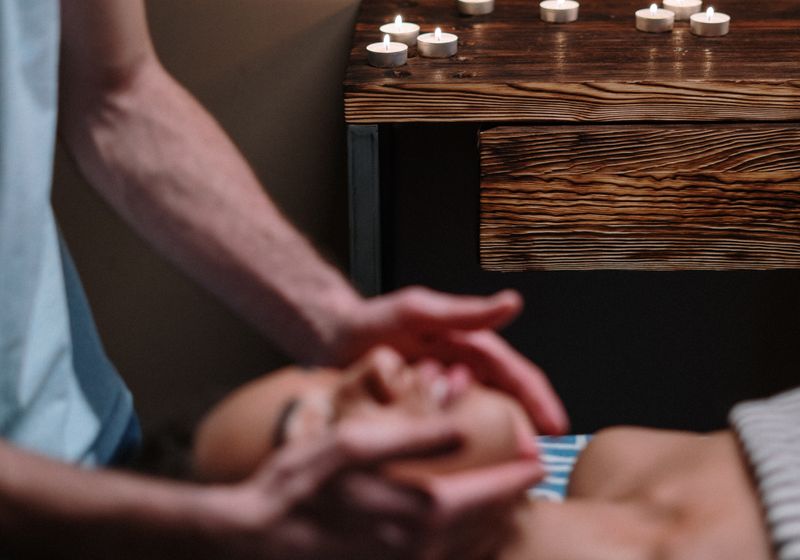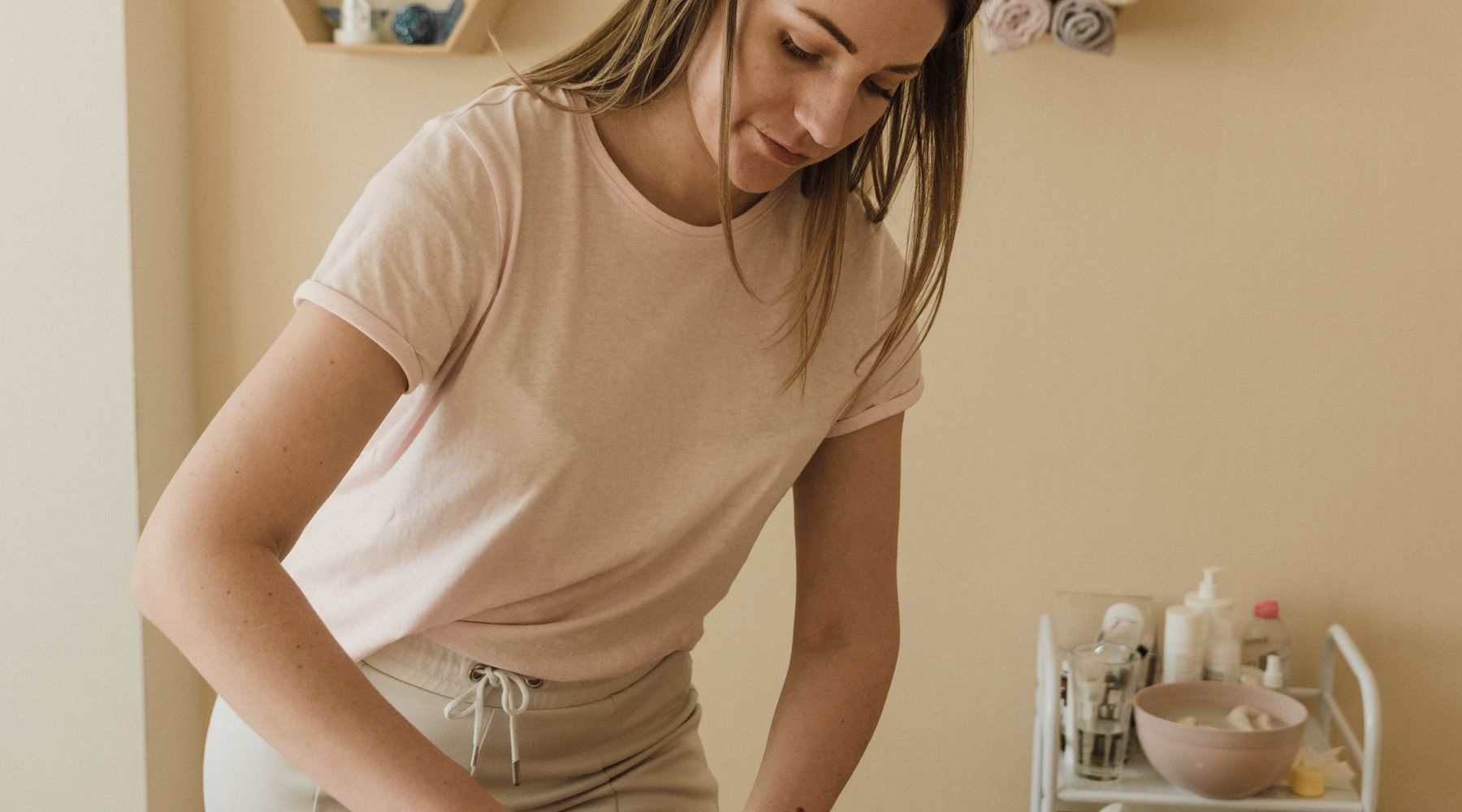
Shiatsu is given on a floor mat, fully clothed, with no oil. There is no draping ritual, no music to mask the room, no warm towel rolled out. The practitioner kneels next to you and uses palms, thumbs, and sometimes a knee or an elbow to apply pressure along meridian lines. From the outside it can look strange. From inside it is, of all the things I have studied, the most like a conversation.
The pressure is not flat. A shiatsu practitioner is reading what they meet. A point that pushes back is held differently from one that yields immediately. The hand has the conversation and the body answers in the language it has — which is mostly small, mostly slow, mostly under whatever the mind is doing.
What you feel during a shiatsu hour
Less than you would expect. Most of the work does not register at the surface. You will feel sustained pressure in unlikely places — the inside of the knee, the side of the head, the soft web between thumb and index finger — and you will probably not, in the moment, understand why those places.

Then you will get up. You will walk to the door. And somewhere on the walk home you will realise that an organ you had not known was tight is no longer tight. The breath is deeper. The jaw is unclenched. Something has moved without ever having been addressed directly.
On finding a shiatsu practitioner you trust
There are not many. The training is long — usually three to four years if it is done seriously — and most of the practitioners who go through it leave the modality within a few years because the market in Western Europe rewards table massage. The ones who stay are usually doing it because the work has become a practice for them, not a job.
If you find one, you will know within ten minutes of the first session. The hand will arrive somewhere unexpected, the pressure will be held longer than you think is reasonable, and you will feel — although it sounds strange to write it — listened to. A good shiatsu hour is being listened to by a hand. That is the entire description.
Pressure that asks a question is different from pressure that gives an answer. A good practitioner is asking.
There is a small practice above a bookshop on the Quai du Rhône — the practitioner trained in Kyoto, and her sessions are mostly silence. I send people there when they are stuck in their bodies in a way that table massage has not reached. They almost always come back changed.